
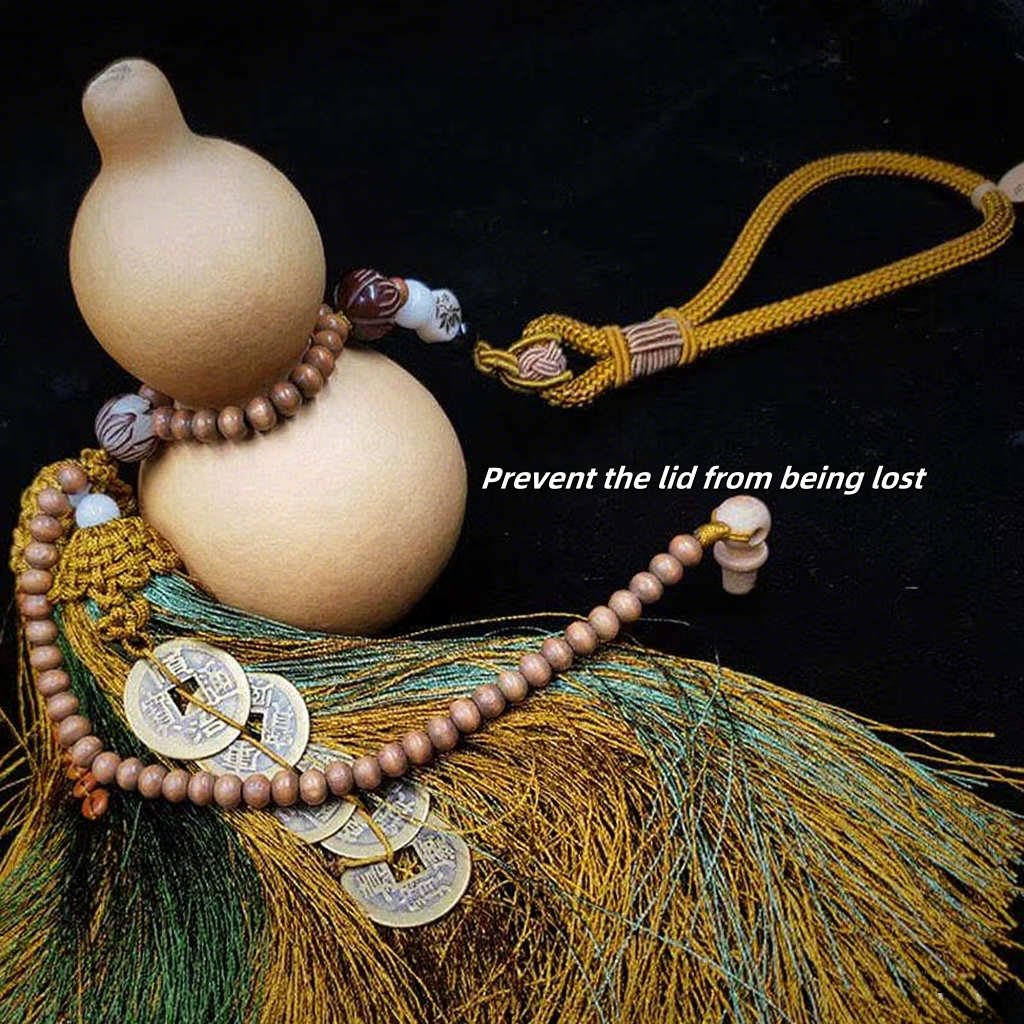
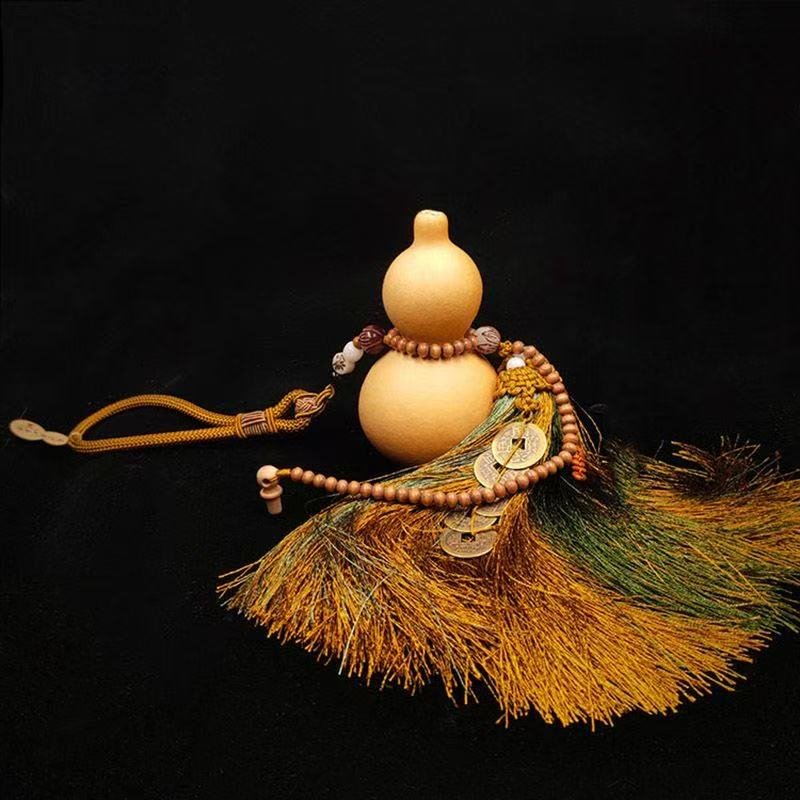

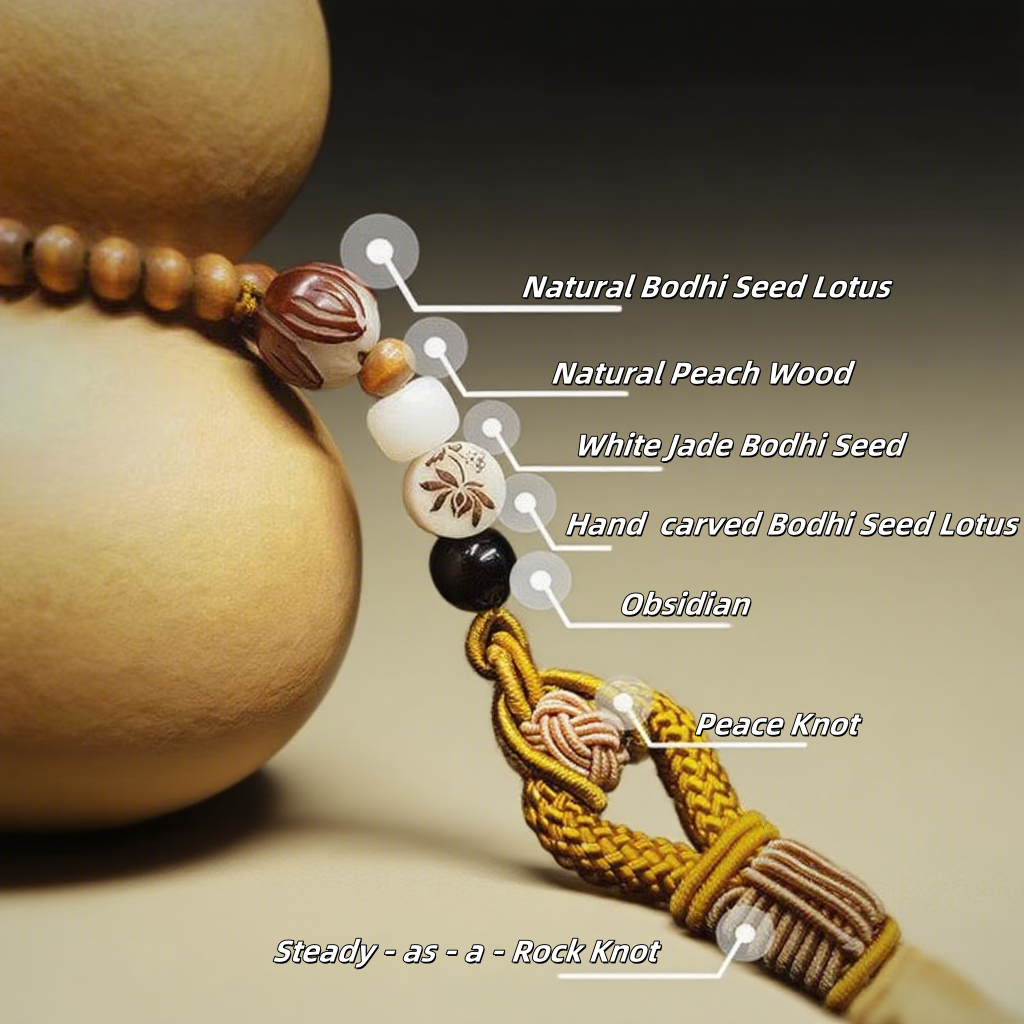
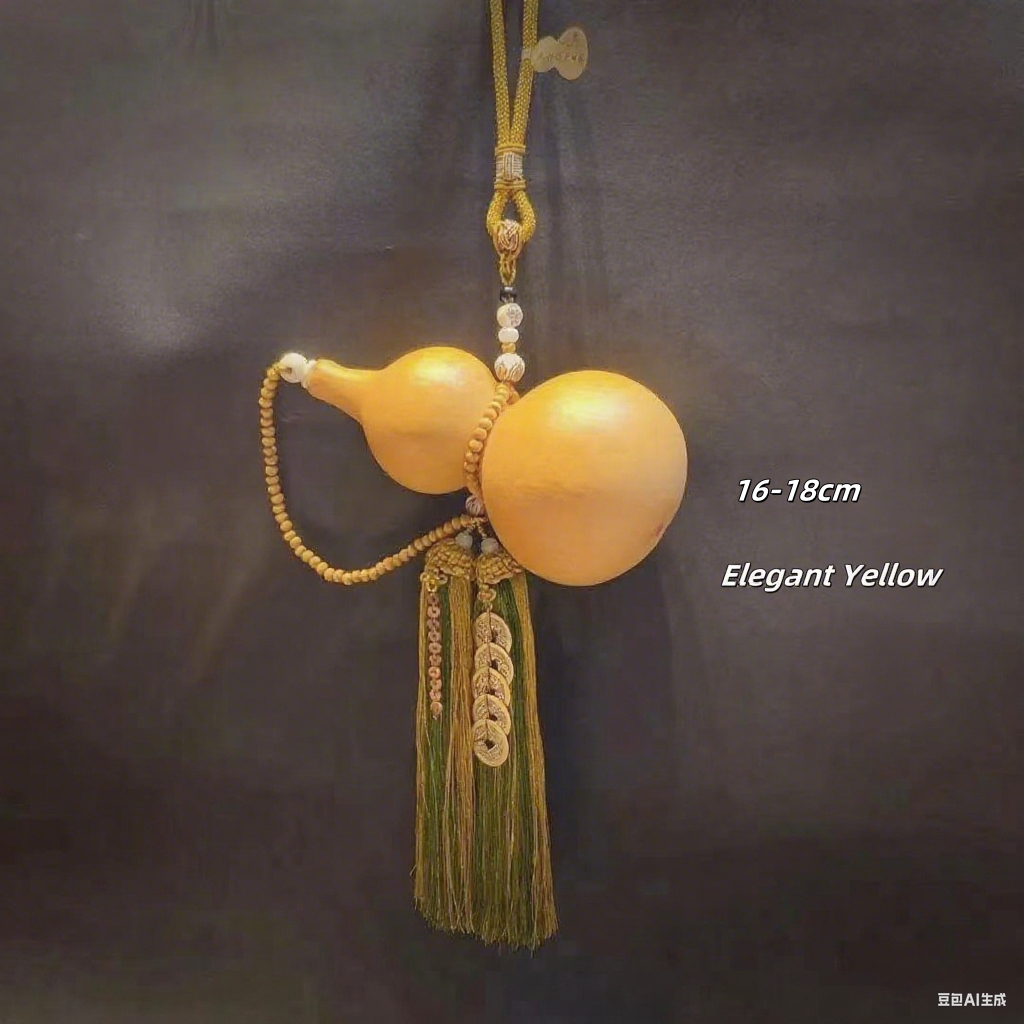
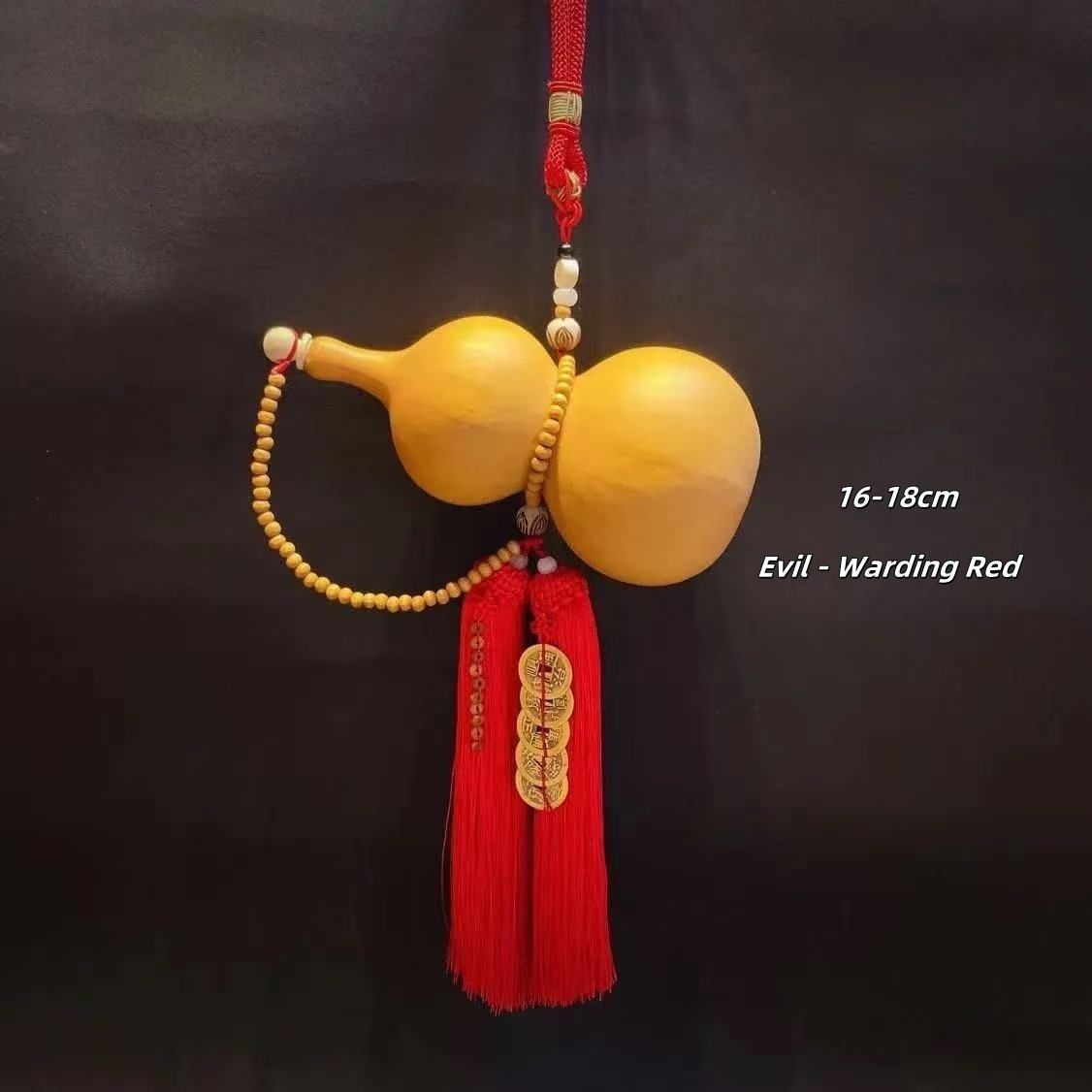

Elegant Yellow Gourd
By a vast rural field lived a hardworking farmer named Tom. He took good care of his farmland every day but always worried that sudden storms would destroy the crops before harvest. One spring, he accidentally got an elegant yellow open – mouthed gourd at the market. An old craftsman told him that yellow, as warm and powerful as the sun, could bring stability and harvest.
Tom hung the gourd by the field ridge and put a handful of plump grain seeds and a dried sunflower petal in it. Throughout the summer, no matter how heavy the thunderstorms were, his crops remained unharmed. When autumn came, the wheat ears were full and the melons and fruits were abundant, making his family have the best harvest in the village. From then on, Tom always hung the elegant yellow open – mouthed gourd by the field, and the villagers followed suit, all believing that this warm yellow could bring good luck for a bumper harvest.
Evil – warding Red Gourd
In a peaceful small village, the residents lived a quiet life, but every night, people always found it hard to fall asleep because of some inexplicable unease. The wise man in the village said that maybe there were bad vibes wandering around.
Lily, a young girl, heard that red had strong protective power to dispel unease. She found an evil – warding red open – mouthed gourd and, as the elders said, put some dried rosemary leaves and a smooth red cobblestone in it. She hung the gourd on the old locust tree at the village entrance, and the bright red color was particularly eye – catching in the night.
Amazingly, since the gourd was hung, the uneasy atmosphere in the village at night gradually disappeared. Everyone could sleep soundly, and life became more smooth. The villagers all thought it was the red gourd that worked. After that, during festivals, people would hang evil – warding red open – mouthed gourds at their doors to pray for peace and harmony.
Introduction to the History and Feng Shui of the Gourd
The gourd, as an ancient plant, has a long – standing cultivation history in China. Archaeologists discovered gourd seeds and related remains at the Hemudu Site in Zhejiang, dating back more than 7,000 years to the Neolithic Age. In ancient times, the gourd had a wide range of uses. It could be used as food, as recorded in The Book of Songs. It was also used in medicine, with many ancient medical books documenting its medicinal value. Moreover, it was a common household item, made into containers, ladles, and more.
In the culture of feng shui, the gourd has special meanings. Due to its shape with a small mouth and a large belly, it is believed to be able to absorb auspicious qi and disperse negative energy fields. The homophone of “gourd” in Chinese is “福禄” (fú lù), symbolizing good fortune and official salary. Its stem, “蔓带” (màn dài), has a homophone meaning “万代” (wàn dài), signifying “good fortune and prosperity for generations”. In addition, since the gourd has many seeds, it represents having many children and a prosperous family.

Reviews
There are no reviews yet.